Empowering Farmers for Food Security: Bafut Council Leads Agricultural Revival Through FEICOM-Sponsored Initiative

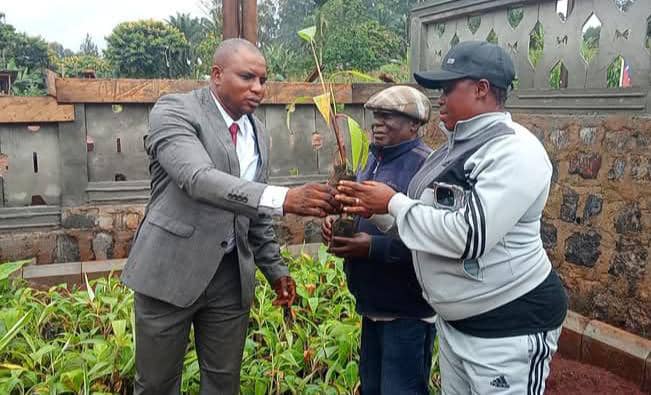
In a bold move to combat food insecurity and foster community resilience, the Bafut Council has launched a comprehensive agricultural empowerment project targeting crisis-affected populations, persons with disabilities, and vulnerable groups within the municipality.
The project, financed by the Special Council Support Fund for Mutual Assistance (FEICOM) and supported by the Hele Kela Foundation, is part of a nationwide call for councils to invest in nutritional improvement initiatives. Bafut stands out as one of only three councils in the North West Region selected to implement this pilot intervention.
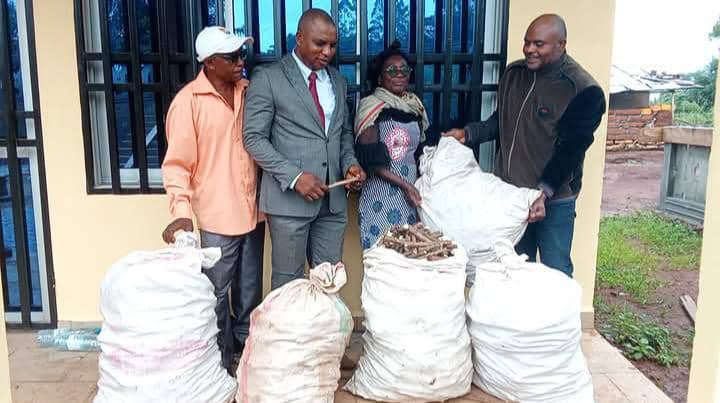
Speaking during the official distribution of agricultural inputs, Mayor Ngwakongoh Lawrence emphasized the long-term vision of the initiative. “The farmers were trained on modern techniques of propagating these seeds to ensure they can share them with other farming groups next year,” he explained. “This will lead to food sufficiency in Bafut. Experts will carry out follow-up visits to ensure farmers comply with proper agronomic practices.”
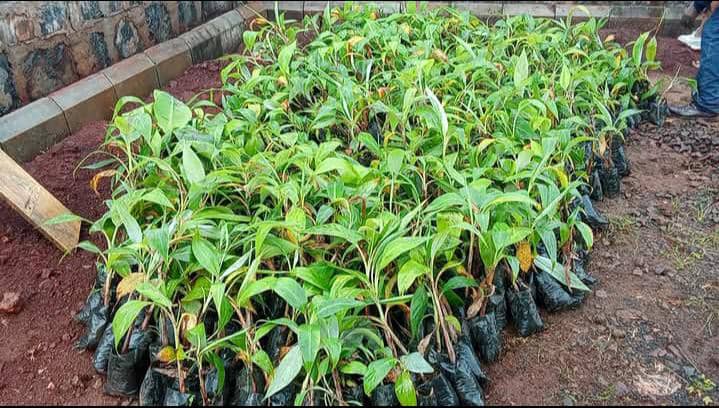
The project has already impacted several farming cooperatives with the distribution of critical seed inputs: 2,148 cassava stems to the Kuku Farming Group of Bawum, 800 plantain suckers to the Berlingie and Mankaha farming groups, and 350 kg of maize seeds to selected beneficiaries.
Divisional Delegate of Agriculture for Mezam, Abireche Hans Utenogo, highlighted the technical support structure put in place. “Our frontline staff are in the field to monitor progress and ensure this leads to an abundance of food in Bafut,” he said.
One of the beneficiaries, Mr. A. Emmanuel, welcomed the intervention, calling it timely and transformative. “This donation addresses a real gap. We’ve been struggling with food sufficiency. The seeds will not only improve the livelihoods of our members but also boost local plantain supply. We’re planning to share with other farming groups. What we need next is poultry to supply manure for our farms,” he suggested.
Beyond seed distribution, the project includes a value-addition component, equipping farmers with agro-processing machines: a palm oil press, a maize grinder, cassava processing equipment, and a rice mill. This aims to strengthen local agricultural value chains, reduce post-harvest losses, and create small-scale agribusiness opportunities.
At its core, the initiative is designed not merely as a handout but as a sustainable empowerment model, reviving agriculture in Bafut as a pathway to food sovereignty, economic recovery, and community cohesion, particularly in the face of protracted socio-political challenges.
As the project continues to unfold, it represents a beacon of solution-focused governance and a replicable model for municipalities across Cameroon grappling with the double burden of conflict and food insecurity.